Acceptance is the turning point between reacting to life and responding to it. Without it, you are still wrestling with the starting line.
When life hands you a challenge, there is often a second battle happening entirely inside your own head.
“This shouldn’t be happening.”
“I wish things were different.”
“If only I’d done things another way.”
That internal argument can last far longer than the event itself.
I remember sitting in my car after something had gone completely differently from how I had planned. I replayed the conversation over and over, thinking of better responses, different decisions, and imaginary versions of the day where everything worked out perfectly. By the time I arrived home, I had spent forty minutes arguing with something that had already happened. Nothing had changed except that I felt even more exhausted.
That is what resistance does. It convinces us that if we replay the situation often enough, reality might somehow negotiate with us, but it never does.
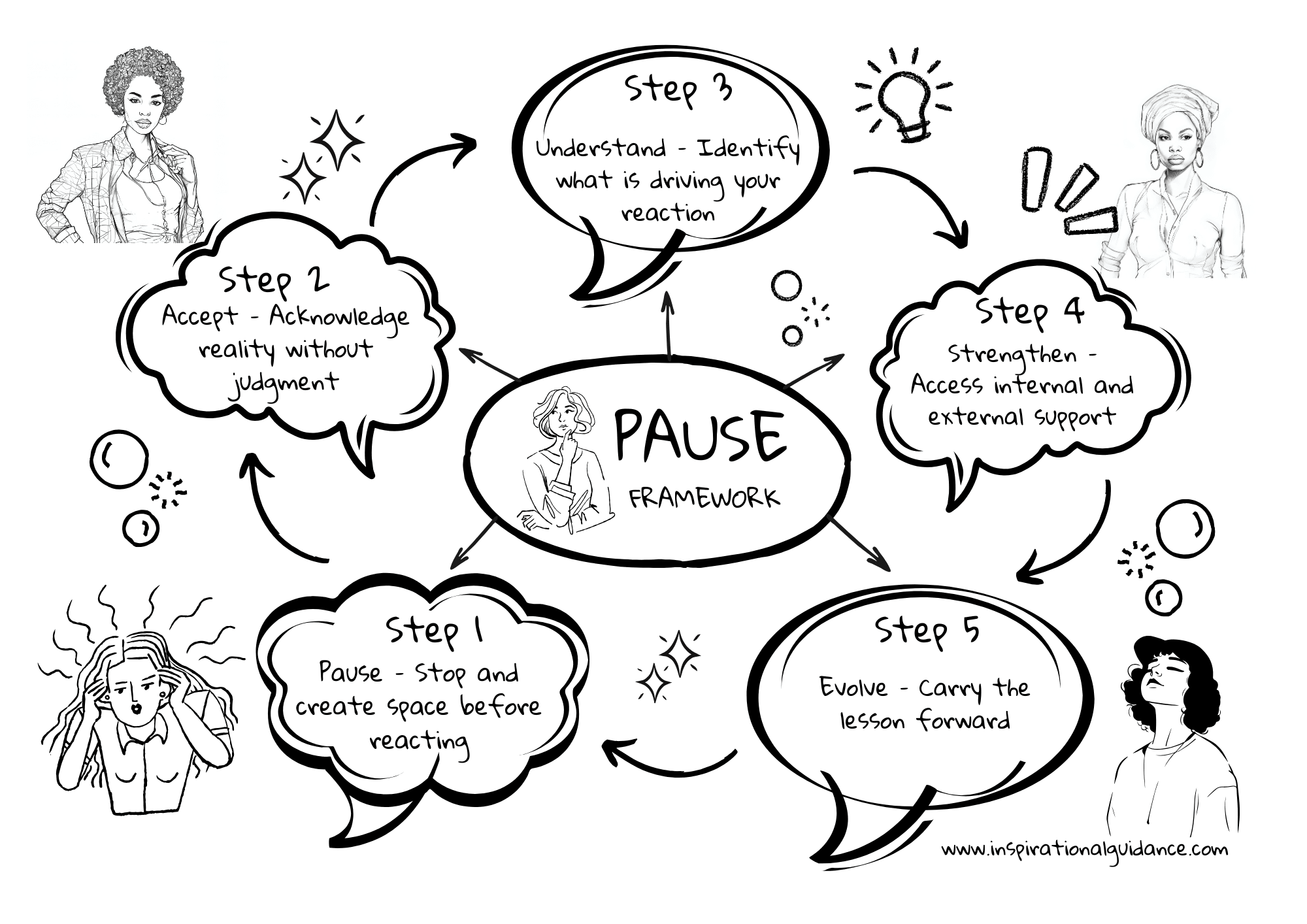
The A in PAUSE is Accept, and it offers another way. Acceptance is not approval. It does not mean you like what has happened, agree with it, or stop trying to improve things. It simply means acknowledging reality as it is today so you can stop wasting energy fighting yesterday.
- Acceptance is not approval and it is not giving up. It is working with what is true instead of against it.
- Name the feeling, not the fight, and separate facts from the stories your mind adds.
- Drop the “should” and ask what you can actually influence.
- Ordinary frustrations are the easiest place to build the habit.
Why Acceptance Works
There was a period where I kept re-explaining a situation to myself as if enough reframing would make it not have happened. It didn't change anything except how exhausted I was. The moment I actually said, out loud, 'this is what's true right now,' the fight went out of it and I could finally think straight.
One of the biggest changes I have seen in both myself and the people I have coached is what happens when they stop arguing with facts. The situation may still be difficult, but once they accept that it is real, their attention naturally shifts toward what comes next instead of what should have happened.
When you skip this step, your energy drains into wishing things were different, you get stuck in loops of “if only” and “why me,” and you make choices from frustration instead of clarity. When you accept what is true, you free up energy for action, you think more clearly about your next move, and you feel lighter, even in hard moments.
How to Build Acceptance
- Name the feeling, not the fightInstead of “This is so unfair,” try “I feel disappointed,” “I feel embarrassed” or “I feel hurt.” When you name the feeling, you stop feeding the story around it.
- Drop the ‘should’Replace “This shouldn’t have happened” with “This is what’s here right now.” It does not make the situation pleasant, but it makes it workable. It’s not a surrender, it’s a reset.
- Anchor with your breathBreathe in as you name what’s true (“The meeting has been rescheduled”). Breathe out as you tell yourself, “And that’s okay for now.” This grounds you and stops the mind from spinning.
- Separate facts from storiesFact: the meeting was called off. Story: they called it off because they do not respect me. The first is something you know. The second is something your mind has added. Acceptance begins with facts.
- Check what you can influenceAsk: “Is there anything useful I can actually do about this?” If yes, make a plan. If no, acceptance usually becomes the healthiest option available.
- Open your handsThis is an NLP anchor. Open your hands, palms up, as you breathe and imagine the tension dropping into your lap or the floor. Over time, the gesture becomes your body’s signal for release.
Everyday Examples of Acceptance in Action
- A postponed presentation. You have been preparing for weeks, and the client emails to say it’s postponed. Instead of stewing over lost time, you take a deep breath, say “This is what’s happening,” and let your shoulders drop. From that calmer place, you decide to refine your slides so they are even stronger for the new date.
- Work disappointment. A project you cared about is given to someone else. You may not agree with the decision, but once you accept that it has been made, you can decide how to use your time and energy instead of replaying the disappointment for weeks.
- Family conflict. Someone close to you holds opinions you dislike. You may never change their mind, but accepting that allows you to choose whether protecting the relationship matters more than winning another argument.
- Health changes. An unexpected diagnosis or injury forces you to rethink your plans. Acceptance does not remove the sadness, but it often shortens the time spent wishing life had stayed the same and lets you begin adapting.
Acceptance often arrives in very ordinary situations too. Standing in traffic, waiting for delayed trains, or discovering the website you were working on has suddenly stopped behaving properly. My first reaction is still occasionally, “Oh no...” but experience has taught me that the problem gets solved much faster once I stop wishing it did not exist.
Why Acceptance Can Feel Like Giving Up
This is probably the biggest misunderstanding. When people hear the word acceptance they imagine surrender. They worry that accepting reality means lowering their standards or abandoning hope. It is neither. Acceptance is refusing to waste energy on the part you cannot change so that you have more energy for the part you can, and there is nothing passive about that.
“If I accept it, I’m letting them off the hook.”
Acceptance doesn’t erase accountability. It simply brings you into the present so you can choose a better response.
“It feels like giving up.”
It’s the opposite. Acceptance clears the fog so you can act more effectively.
“I can’t accept this.”
Start smaller. Accept a single fact, such as “I feel upset,” before trying to accept the whole situation.
Building the Habit
- Work on it with everyday frustrations like queues, traffic, or delayed deliveries.
- Keep a journal of situations where acceptance helped you move forward more quickly.
- Pair acceptance with the Pause step before making important decisions.
- Put a simple reminder where you will see it, such as “Work with what is.”
Acceptance removes the friction between you and reality. Instead of asking “Why is this happening to me?” your attention gradually shifts toward a far more useful question: “Given that this is where I am, what would be the best next step?” That question changes everything. It is also what allows the next stages of PAUSE (Understand, Strengthen and Evolve) to do their work.
Try this today
- What have I been resisting, big or small?Name it. Drop the “should.” Breathe into it.
- Given that this is where I am, what is the best next step?
- Acceptance is acknowledging what is, so you can work with it.
- Name the feeling, separate fact from story, and let go of “should.”
- Next time something does not go to plan, try: “This is how things are right now. I may not have chosen it, but I can still choose what I do next.”
This article is part of the PAUSE framework. Download the free guide below to learn all five steps: Pause, Accept, Understand, Strengthen, and Evolve.